Article: Goodbye, Clean Girl? Fashion Is Getting Messy, Feminine and Fun Again
Goodbye, Clean Girl? Fashion Is Getting Messy, Feminine and Fun Again
For the past few years, fashion has been remarkably well behaved.
Neutral wardrobes. Slicked-back hair. Barely-there makeup. Perfectly tailored basics. Gold hoops. Cream sweaters. Quiet handbags. Everything coordinated, polished and seemingly effortless.
The “clean girl” aesthetic became more than a beauty trend—it influenced the way we dressed, shopped and presented ourselves. Alongside quiet luxury and minimalist dressing, it celebrated restraint. Beige was beautiful. Simplicity was sophisticated. Looking as though you hadn't tried too hard often required quite a lot of trying.
But fashion rarely stays in one mood for long.
And lately, something feels different.
Color is creeping back in. Lace is showing. Prints are colliding. Skirts are moving. Jewelry is getting bigger. Romantic details are appearing where minimalism once ruled.
Fashion seems ready to have fun again.

From Perfect to Personal
Perhaps the biggest shift isn't one particular hemline, color or silhouette. It's the return of personality.
Instead of asking, “Does everything match?” we are beginning to ask, “Does this feel like me?”
That distinction matters.
The new femininity doesn't necessarily mean dressing head-to-toe in florals or abandoning your favorite tailored trousers. It's about allowing clothes to have character again.
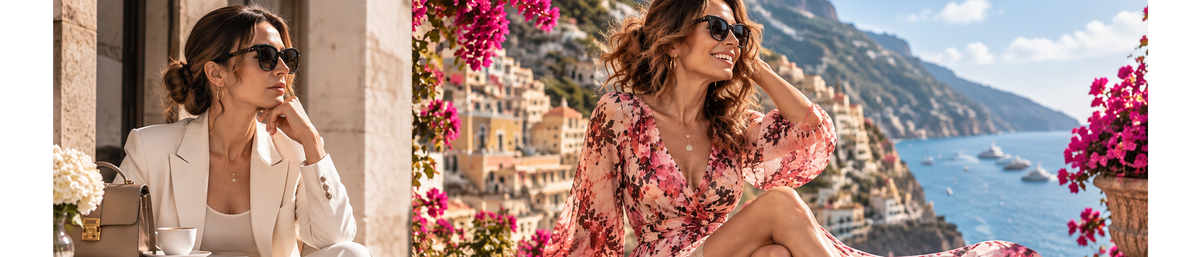
A delicate lace detail under a structured blazer. A flowing skirt with an unexpected pair of shoes. Vintage jewelry worn with a simple white shirt. A romantic dress paired with something decidedly practical.
The interesting part is the contrast.
After years of carefully edited wardrobes, fashion is rediscovering the pleasure of having something simply because you love it.

Feminine Doesn't Have to Mean Fragile
For a while, “serious” fashion seemed almost determined to remove overt femininity.
Clean lines, oversized tailoring and gender-neutral basics dominated many wardrobes. There is still plenty to love about those pieces, but femininity is returning in a way that feels less restrictive than before.
Lace, sheer fabrics, bows, draping, embroidery, lingerie-inspired details and flowing silhouettes are becoming part of the conversation again.
But this isn't necessarily a return to old rules about how women should dress.
Quite the opposite.
Today's femininity can be romantic one day and powerful the next. It can mean a silk dress, a sharply tailored suit, a dramatic skirt or jeans and a lace camisole.
The point isn't to look feminine for someone else.
It's having the freedom to decide what femininity looks like for you.
The Return of Lace
Few materials communicate femininity quite like lace.
For centuries it has moved between underwear and outerwear, innocence and sensuality, tradition and rebellion. Sometimes fashion hides it. Sometimes fashion puts it proudly on display.
Right now, lace feels particularly relevant because it fits beautifully into fashion's move away from sterile perfection.
It has texture. It has detail. It isn't perfectly smooth or minimal.
And that's precisely its charm.
At Bandelettes®, we've always believed that something practical doesn't have to look purely functional.
Our lace thigh bands were created to solve a very ordinary problem—inner-thigh chafing—but the solution was intentionally made beautiful.
Why shouldn't it be?
A woman shouldn't have to choose between feeling comfortable and feeling attractive.

When What’s Underneath Becomes Part of the Outfit
Another interesting change in fashion is the increasingly blurry line between underwear and outerwear.
Sheer skirts, transparent fabrics, slips, corsetry and lingerie-inspired pieces have made what we wear underneath almost as important as the outfit itself.
That creates an interesting question:
If people might see it, why shouldn't it be beautiful?
It's an idea that Bandelettes understood long before sheer dressing became a runway conversation.
Traditional anti-chafing solutions were often designed to disappear: bulky shorts, powders, creams or utilitarian garments hidden beneath clothing.
Bandelettes approached the problem differently.
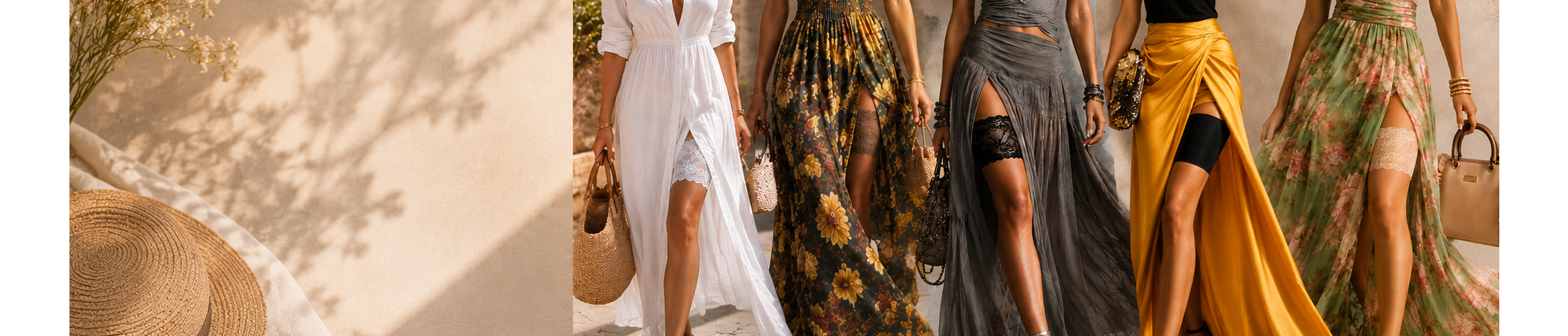
The original lace thigh bands were designed to prevent thigh friction while looking like something you might actually want to reveal.
Under a slit skirt, a flowing summer dress or a sheer layer, a glimpse of lace doesn't necessarily have to be a wardrobe malfunction.
It can be part of the look.
Comfort Is Becoming Part of Style
There is another reason this more playful fashion moment feels different from trends of the past.
Women are increasingly reluctant to suffer for fashion.
We want the dress—but we also want to walk comfortably in it.